
The Displaced Topologies (2023-2026) collection explores belonging to disparate cultures through storytelling, ancestry, deep history, displacement, borders, and man-made structures. It gathers artworks that symbolize structures, documents, and humans connected by migration, displacement, and cultural heterogeneity. These works focus on the processes of fracture, disintegration, and rebuilding.
An abstract visual language is utilized to express a dichotomous cultural identity and to ponder the questions: As displaced people, how do we create a sense of home and build community in foreign places? What is the contribution of displaced people to the future?

Home Abroad (2023) and Morning Star (2024) are sewn canvas collages that evoke a relocated kind of life, where parts from different cultural worldviews come together to form something new. Minimalist compositions juxtaposed with the chaotic, galactic-looking patterns signify making order out of chaos, akin to making a home in the pandemonium of a displaced life.

Remnants of Time (2025) is a series of handwoven human-sized textiles. The warp/weft structures have been manipulated through tangling, unravelling, and pooling, referencing the soft structures experienced in intimate places and symbolizing the management of adverse situations within ourselves.

Eternal Domicile (2022-2025) is a series of abstract paintings that forges artistic connections between old and new cultural narratives through storytelling by interweaving the known with the unknown and the imagined, whether Serbian, Canadian, or multicultural. The visual language explores the intersection of abstract expressionism and contemporary constructivism in collage-like compositions. The themes combine nostalgia for the naivety of Yugoslav utopia with present concerns in Western Canada: its complicated history and endangered future.
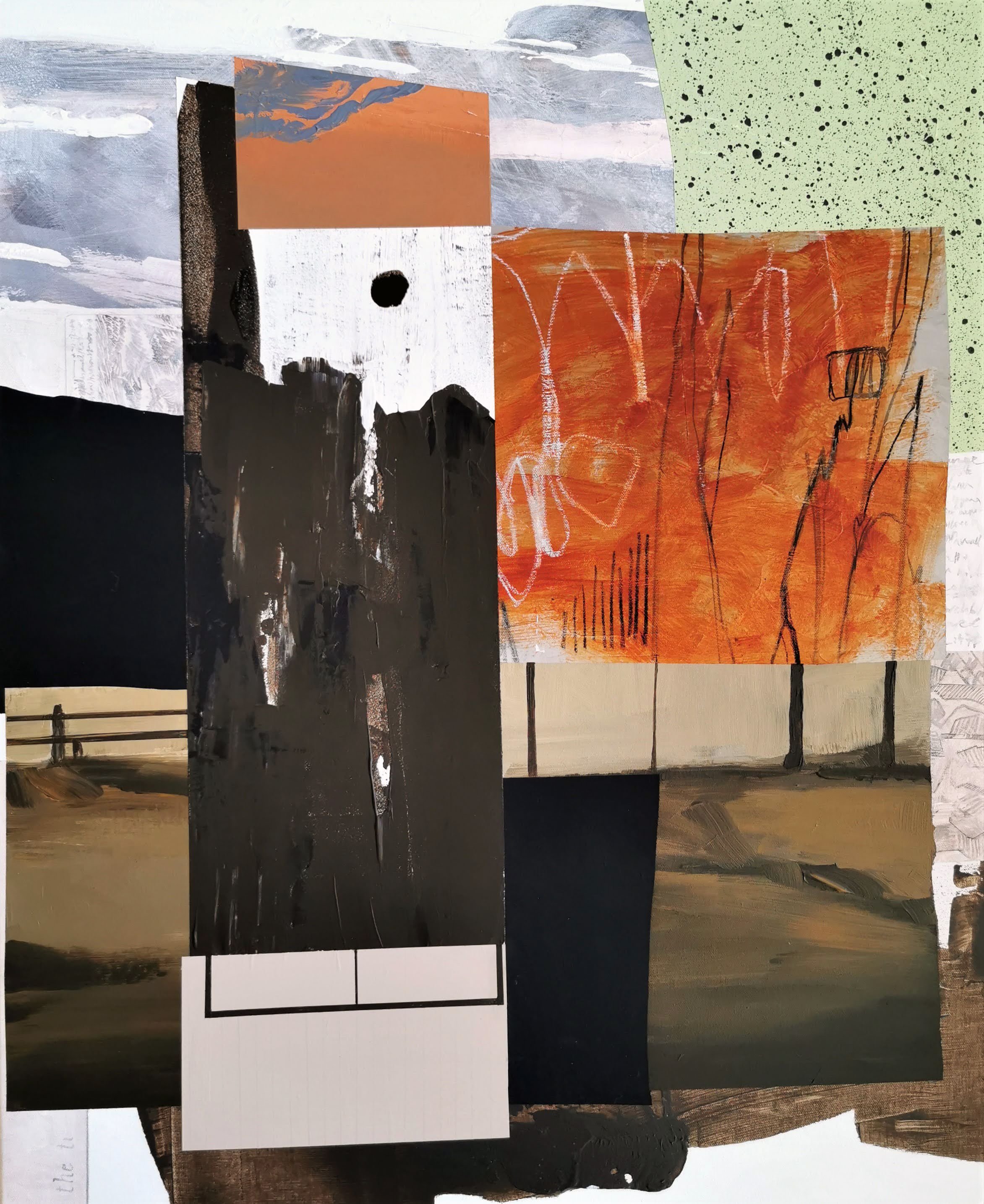
Halcyon Days (2023) series explores the emotions associated with the broader concept of home, its complexity, and the layering of memories and hopes for the future.
“The country we call home, the country we used to call home, and the country we dream to call home are all very distinct and disparate places. It is the result of a productive schizophrenia: we are in all of them at once, a ravishing sensation but one tempered by the slow, sobering devastation of never being in any one entirely.”
Slavs and Tatars Art Collective